

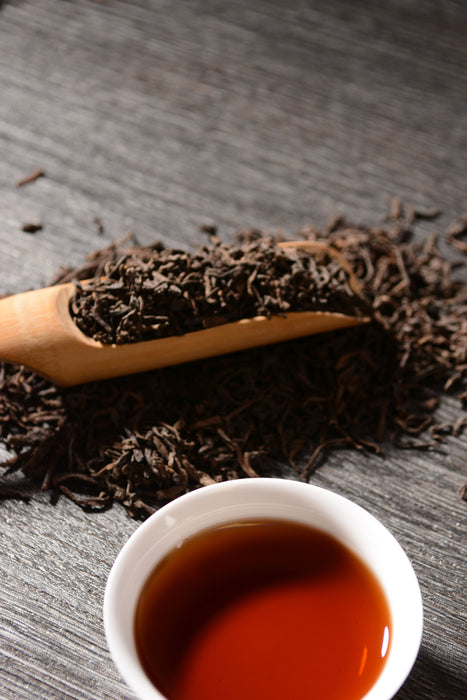
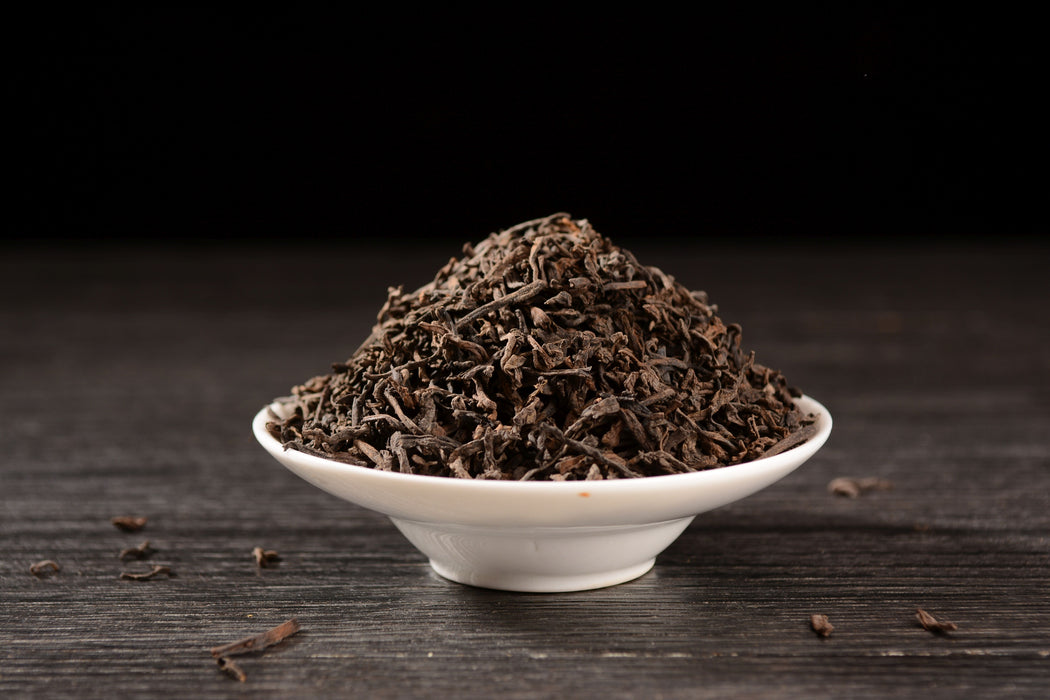
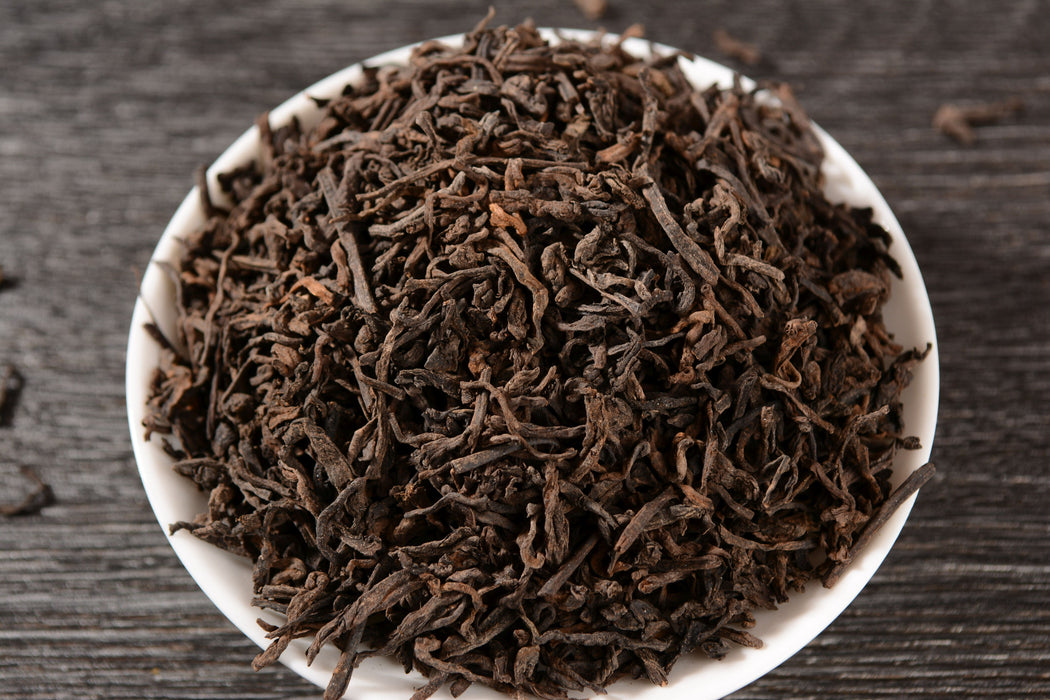
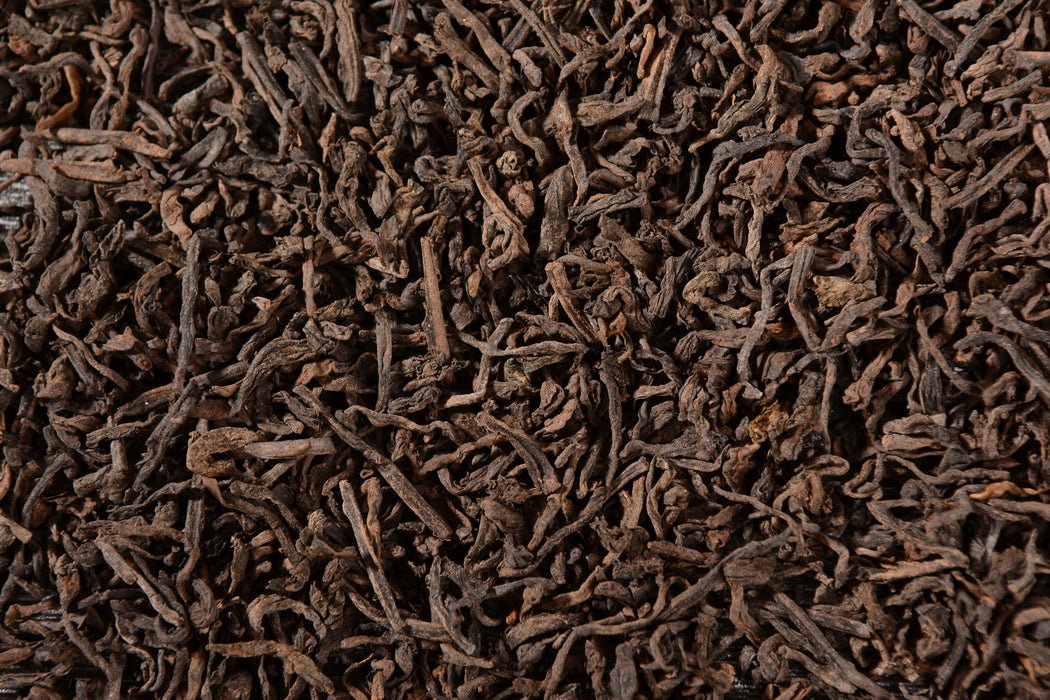
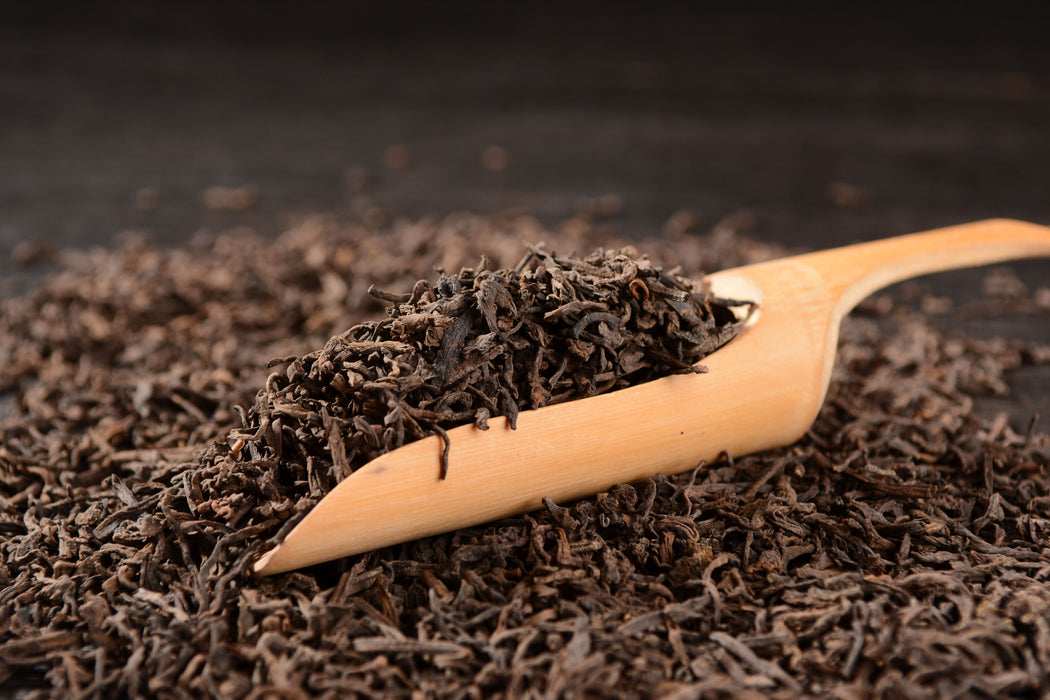
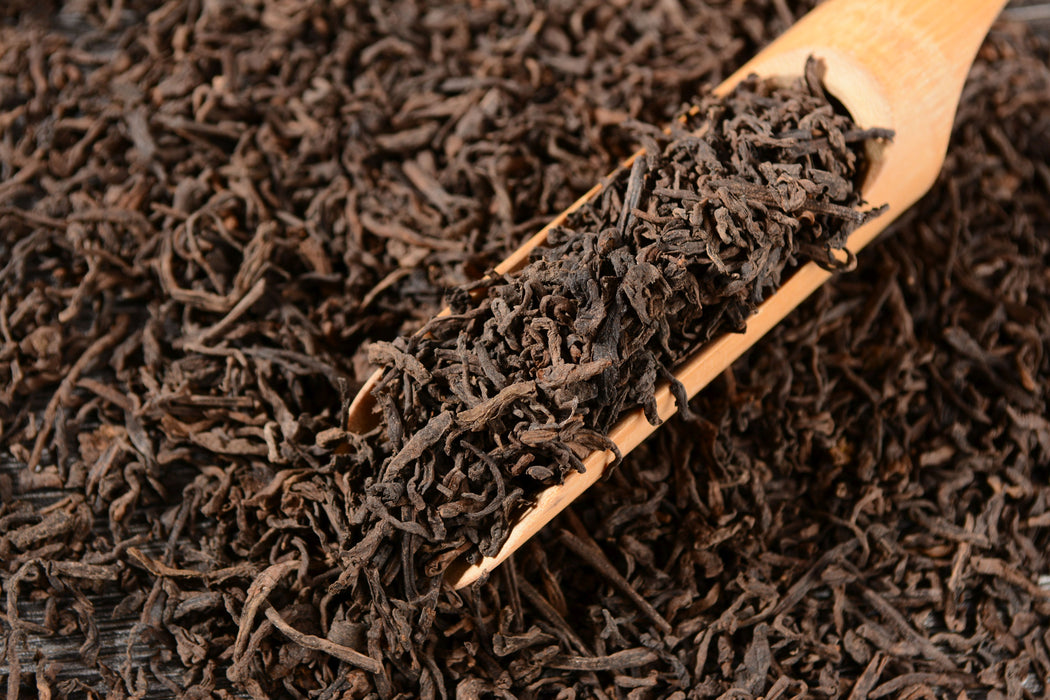
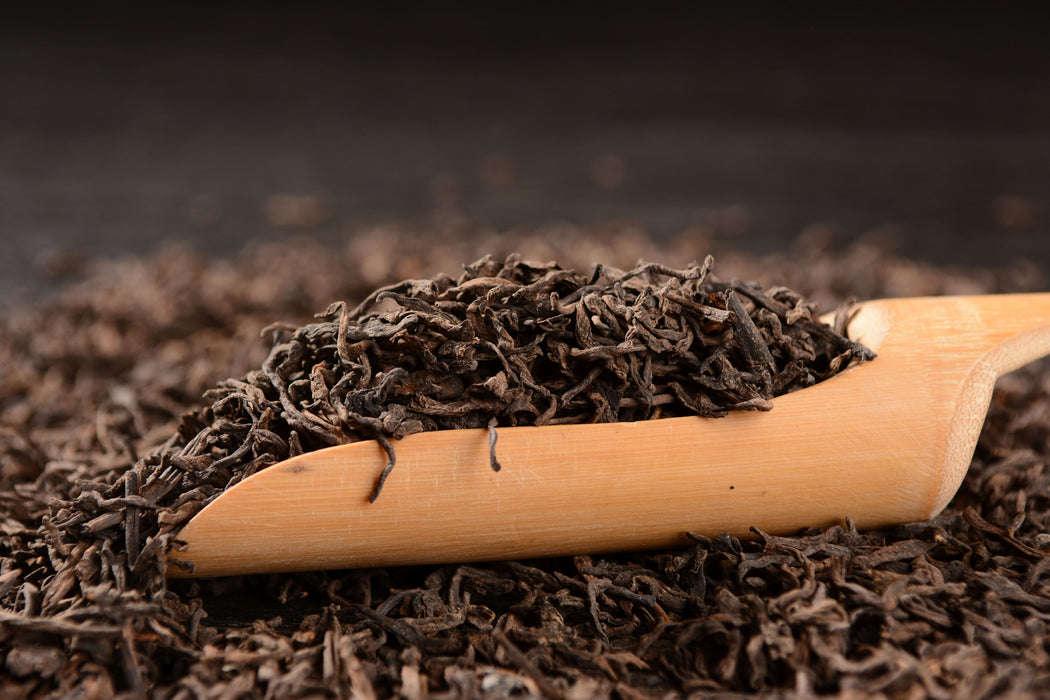
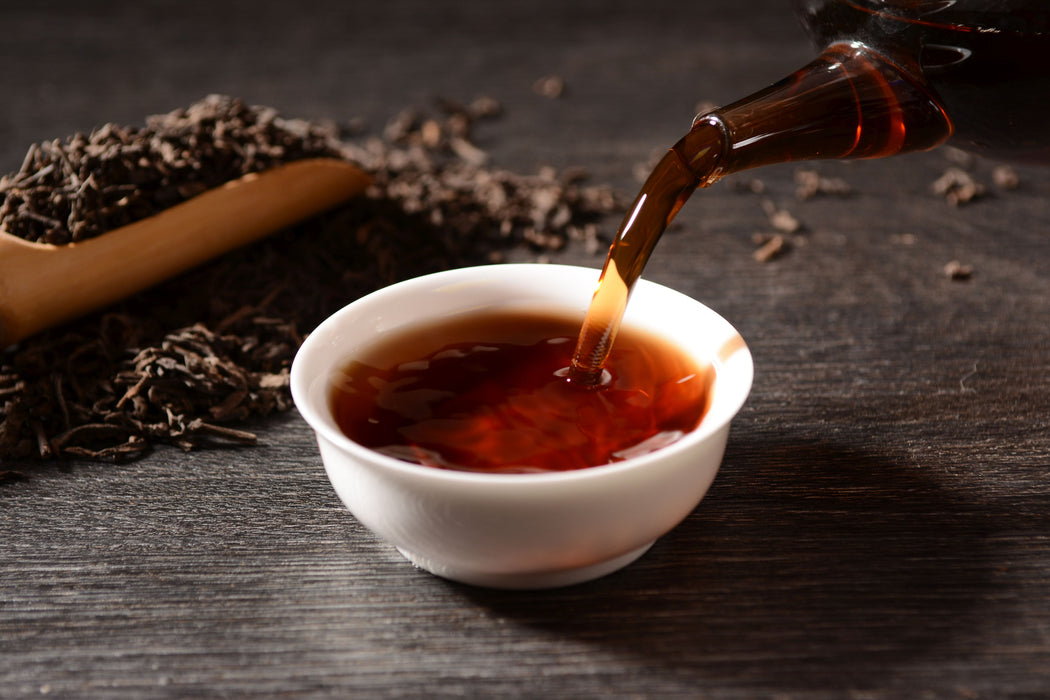
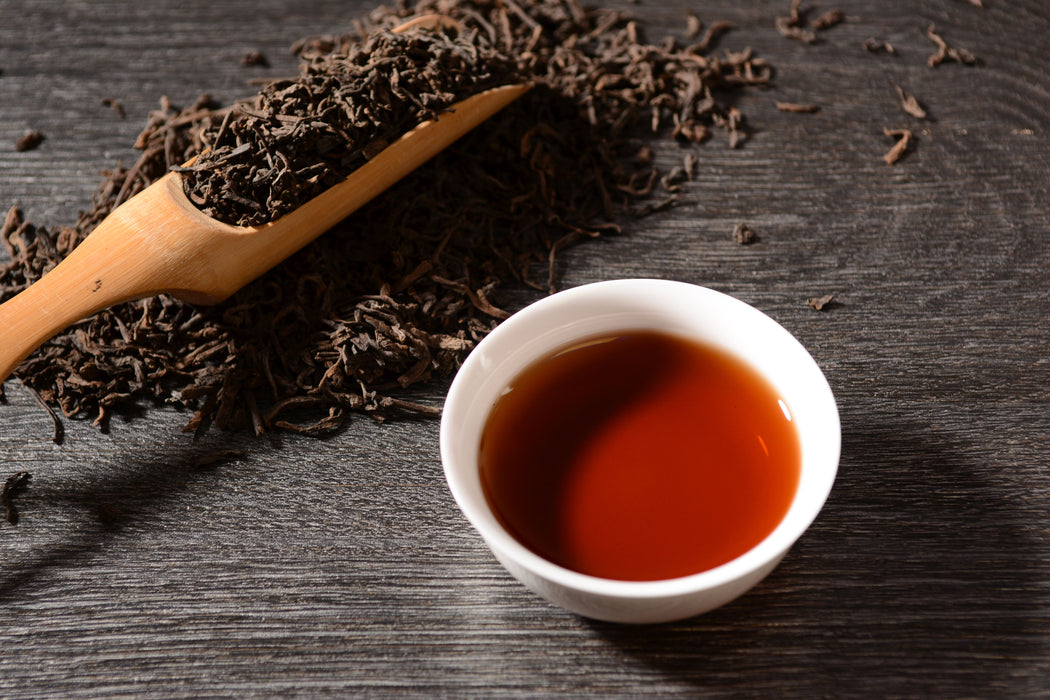
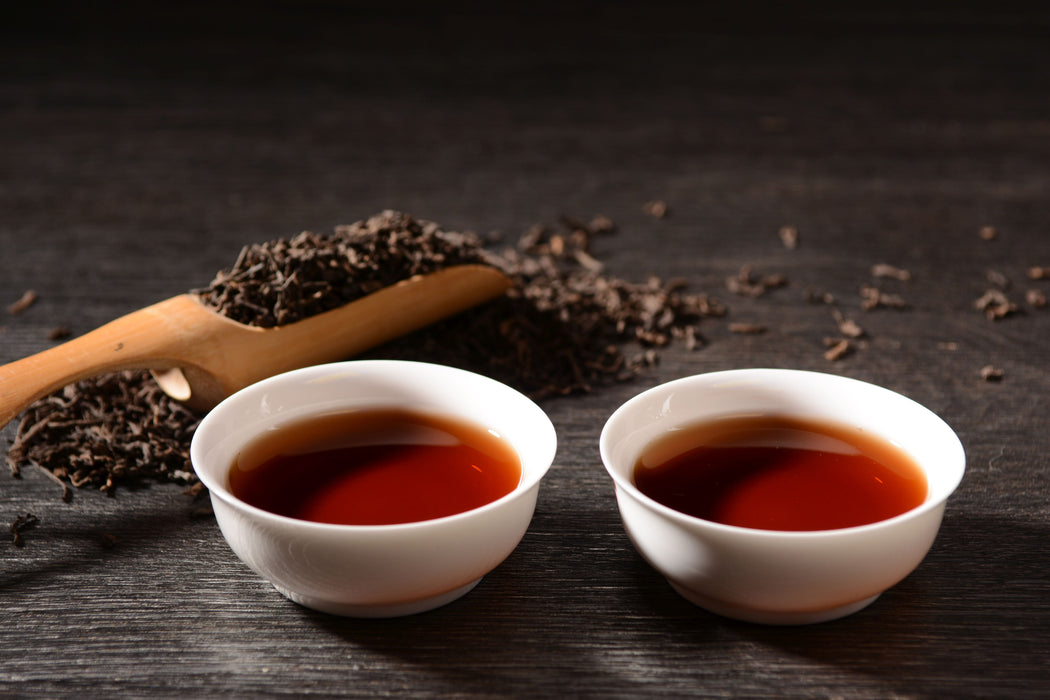
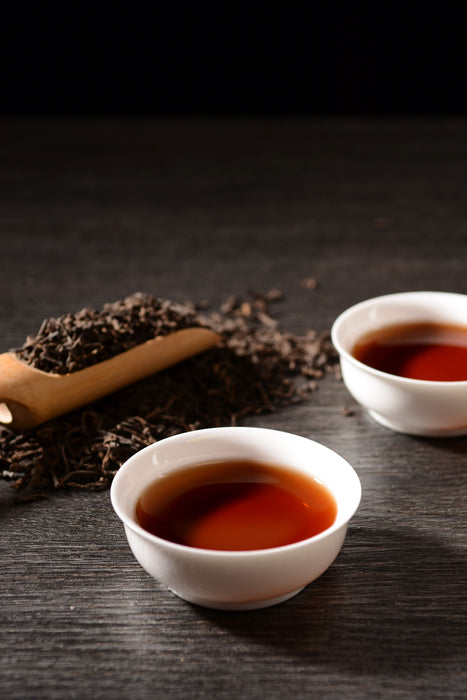
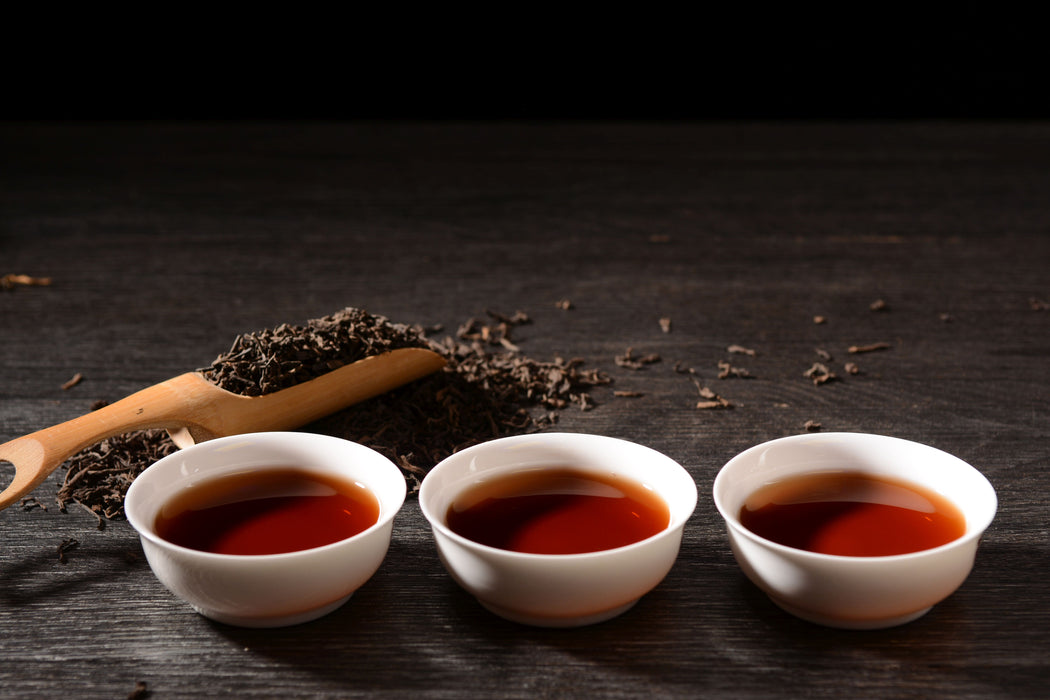
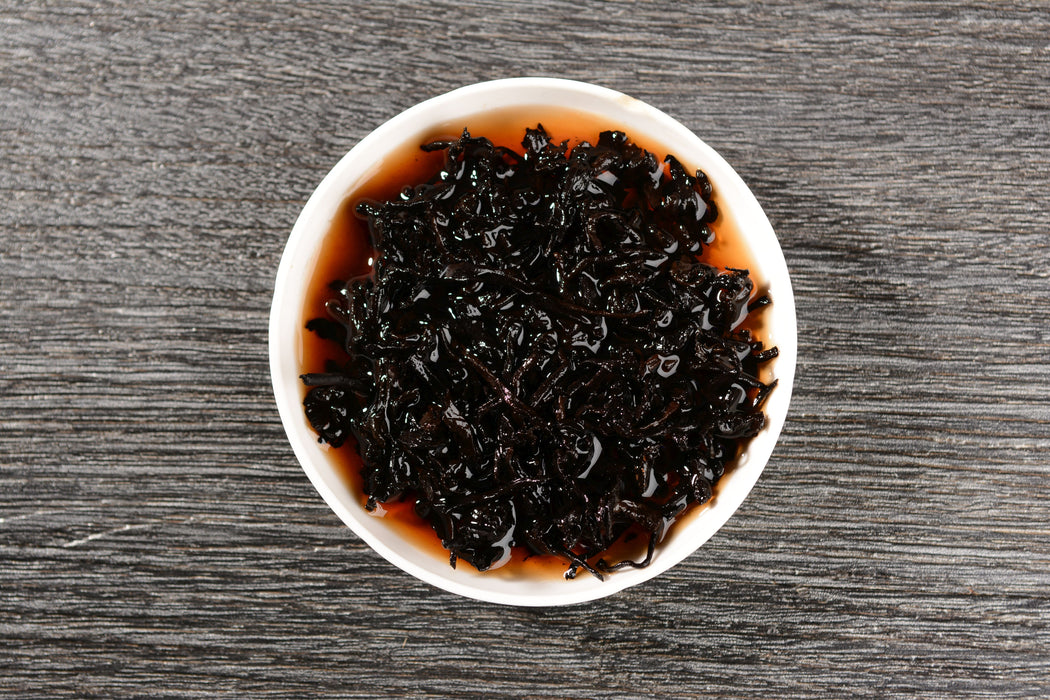
Jinggu Aged "Zi Cha" Purple Loose Leaf Ripe Pu-erh Tea
Purple tea (aka Zi Cha) is a large leaf varietal (Camellia Sinensis var. Assamica) that occurs naturally as a result of mutation.
This ripe tea is incredibly unique both because it's made from wet piling 100% purple tea varietal, and because of the taste as well!
Ultra velvety smooth tea, with tons of creamy sweetness. The aging process in Jinggu (warm and humid climate) has transformed this tea into something to be enjoyed right now. The creamy sweetness and fruit juice notes are wonderful to behold but there is something totally unique about this tea!
Harvested in Spring 2011, wet piled in late 2011 and then stored in Jinggu (Simao, Yunnan) until October 2019.
There is a "cha tou" tea nuggets version of this tea from the same wet piling batch (and storage condition) available here! We recommend blending the the two together!
Altitude 1400 meters
For more information on Purple tea read below:
Purple Varietal of Camellia Sinensis Assamica
Yunnan Pu-erh tea grows in the superior environment of low latitude, high altitude South Asian tropics and achieves many qualities of superior tea. Among pu-erh tea, purplish red bud tea is particularly valued.
During the hot, humid summer and fall seasons a portion of tea tree buds are purplish red colored. The source of the color is anthocyanin, which changes color along with cell sap acidity. High levels of acidity lead to red color, while medium acidity is more purple, and high alkalinity tends toward indigo. Purplish red tea results from an inherited reaction to unfavorable hot and humid summer environmental conditions, providing the tea tree with a mechanism for fighting scorching ultraviolet rays.
Pu-erh tea growing areas tend to be between 1000 and 2000m elevation. According to surveys, higher altitude tea growing areas receive as much as 8 times the ultraviolet light of lower altitude growing areas. During the dry spring tea season, the atmosphere tends to be quite dusty which serves to reflect, scatter, and absorb most ultraviolet light. Entering into the rainy season, atmospheric dust is frequently washed away by rain. These clean, clear atmospheric conditions allow virtually all UV light reach the surface. In order to resist damage from this shortwave radiation, tea leaves produce anthocyanin, which can reflect away a portion of the UV light hitting the leaves. Although a southern Yunnan tea field during the high of the summer is a sea of green, most eye-catching are the specks of purplish-red scattered throughout. Purple bud tea trees occupy approximately 1-2% of all tea trees, and occur with varying intensities of purple.
Purplish red bud tea has throughout history been regarded as a standard for quality tea. Lu Yu in the "Cha Jing" evaluating the color of tea leaves, came to the early conclusion: "bright cliffs and gloomy forests, purple is the highest and green the second". Purple tea features prominent fragrance and rich flavor. A small number of tea trees growing on the rocky slopes of Fujian's Zhengyi mountain, because of their red color, are given the famous name Da Hong Pao. Another historically famous purple tea is Zhejiang province's Guzhu Zisun.
Purple Bud Tea, grown in high mountain ancient tea fields, is hand-picked by growers who select only young tender buds from the purple tea trees. It is solely and painstakingly processed to produce a very small quantity of heavenly tea.
Purple bud tea anthocyanin can be bitter, so it is recommended that those who do not enjoy bitter flavors reduce the strength of their brew so as to enjoy the fine tea flavor.